
The History of the Elven Peoples
Share
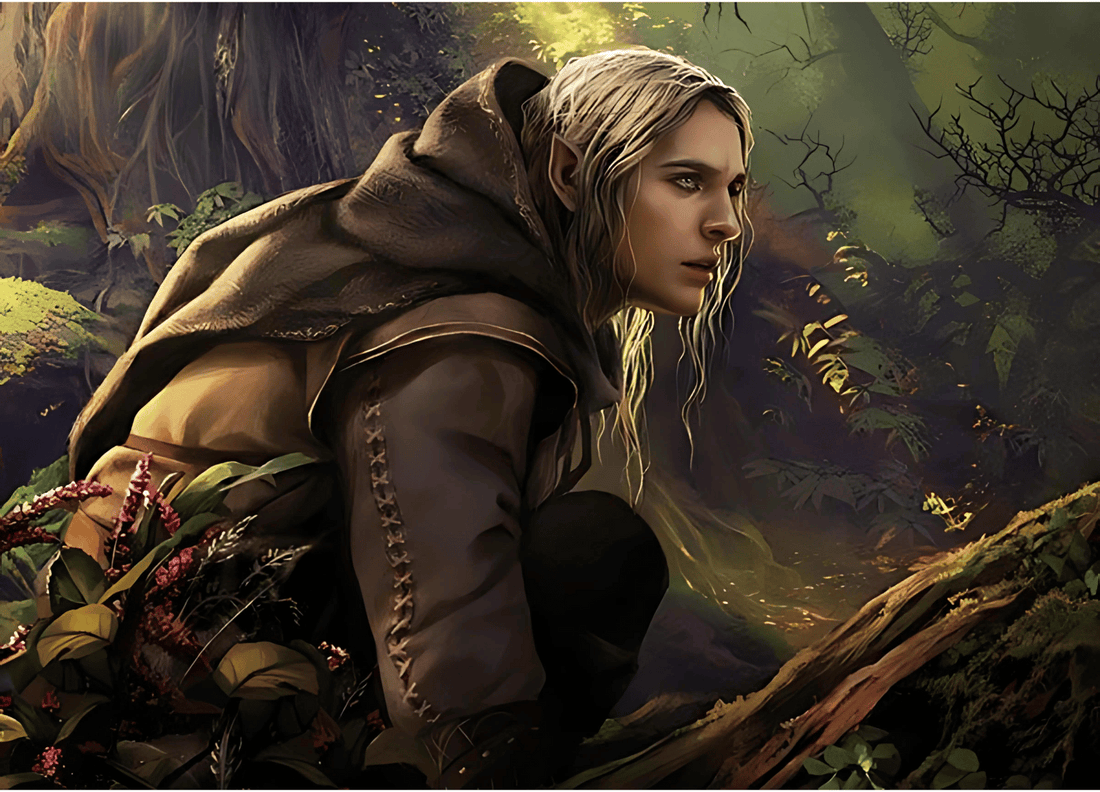
The story of the elven peoples in J. R. R. Tolkien's "The Lord of the Rings" is an epic tale that spans millennia, covering tales of glory, tragedy, and magic. The elves, also known as the Eldar, are immortal beings who have played a crucial role in the events of Middle-earth. Their story begins long before the events narrated in "The Lord of the Rings" and has its origins in "The Silmarillion."
The Origins of the Elves
Elves are the firstborn of the Children of Ilúvatar, the creator god in Tolkien's mythology. They awaken at the edge of Lake Cuiviénen, in the east of Middle-earth, under the stars, before the sun and moon have been created. They are soon discovered by the Valar, powerful beings serving Ilúvatar, and invited to join Valinor, the blessed land of the west. However, not all elves accept this invitation, leading to the division of the elves into several groups, including the Vanyar, the Noldor, and the Teleri.
The Silmaril Wars
Much of the history of the Elves is marked by the quest for the Silmarils, three jewels created by Fëanor, a prince of the Noldor. These stones contain the light of the Two Trees of Valinor, destroyed by Morgoth, the first Dark Lord. When Morgoth steals the Silmarils and takes them to Middle-earth, the Noldor swear to reclaim them, leading to endless wars against Morgoth and his servants. These conflicts are marked by tragedy and betrayal, but also by acts of bravery and nobility.
The First Age
During the First Age, the Elves founded great kingdoms in Middle-earth such as Gondolin, Doriath, and Nargothrond. However, the wars against Morgoth led to the destruction of these kingdoms. Eventually, the Valar intervened and, with the help of the Elves and Men, they managed to defeat Morgoth in the War of the Great Wrath. After this victory, many of the Elves returned to Valinor, but some chose to remain in Middle-earth.
The Second Age
The Second Age sees the rise of Sauron, Morgoth's lieutenant, who attempts to continue his master's work. The Elves, led by Gil-galad, the last High King of the Noldor, and Elrond, play a crucial role in the fight against Sauron. They form an alliance with Men, known as the Last Alliance, and succeed in defeating Sauron at the Battle of Dagorlad, although it is only a temporary victory.
The Third Age and "The Lord of the Rings"
At the beginning of the Third Age, the elves gradually withdrew from the affairs of other peoples, although they continued to play a key role. Elrond founded Rivendell, a refuge for the free peoples, while Galadriel ruled Lothlórien. It was during this time that Sauron forged the One Ring to control the other Rings of Power.
In "The Lord of the Rings," elves provide valuable assistance to the Fellowship of the Ring. Legolas, an elven prince from Mirkwood, joins the Fellowship, embodying the courage and grace of his people. The elven kingdoms also provide resources and guidance, playing a vital role in the fight against Sauron. At the end of the Third Age, after the destruction of the One Ring, many elves leave Middle-earth for Valinor, ending their long history on that continent.
Conclusion
The story of the elves in "The Lord of the Rings" is a story rich in legend and myth, forming an essential part of Tolkien's vast world. Their actions, wisdom and magic have profoundly influenced the course of Middle-earth's history, making the elves unforgettable and iconic characters in this epic saga.